Croatia — the one that jams
Debeli Brijeg on the coast road is the main crossing between Herceg Novi and Dubrovnik, and in July and August it backs up badly — an hour is common, two or three happens on weekends and on the changeover days when rental weeks turn over.
Kobila, a smaller crossing a few kilometres inland, is usually much quicker. It adds fifteen to twenty minutes of driving and can save an hour. Satellite navigation routes everyone to Debeli Brijeg by default, which is precisely why Kobila stays clear.
The rest
| To | Main crossing | Typical wait, August |
|---|---|---|
| Croatia (coast) | Debeli Brijeg | 45 min – 3 h |
| Croatia (inland) | Kobila | 10 – 30 min |
| Bosnia (towards Trebinje) | Ilino Brdo / Klobuk | 10 – 30 min |
| Bosnia (Šćepan Polje) | Hum | Usually minutes |
| Serbia | Dobrakovo / Dračenovac | 20 – 60 min |
| Albania | Sukobin (near Ulcinj) | 20 – 45 min |
| Albania (inland) | Božaj (near Podgorica) | 20 – 45 min |
| Kosovo | Kula | 20 – 40 min |
What the car needs
This is where trips go wrong, and it is entirely avoidable.
- Green card — international motor insurance. A car hired in Montenegro is insured in Montenegro and nowhere else. Croatia, Bosnia, Serbia, Albania and Kosovo all want to see one.
- Written permission from the rental company to take the car abroad. Some forbid Albania and Kosovo outright.
- Vehicle registration document, in the car.
- Passports for everyone, including children. ID cards work between some neighbours but not all.
Ask for the green card when you book, not at the desk on collection. It costs €20 to €50 and takes a day to arrange if they do not have one ready.
Bosnia in the middle of a Montenegrin trip
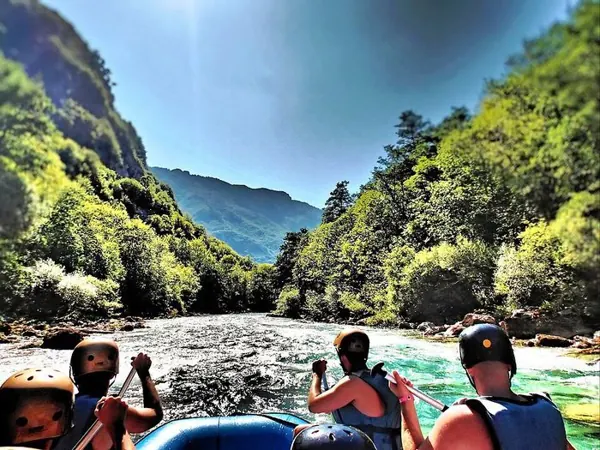
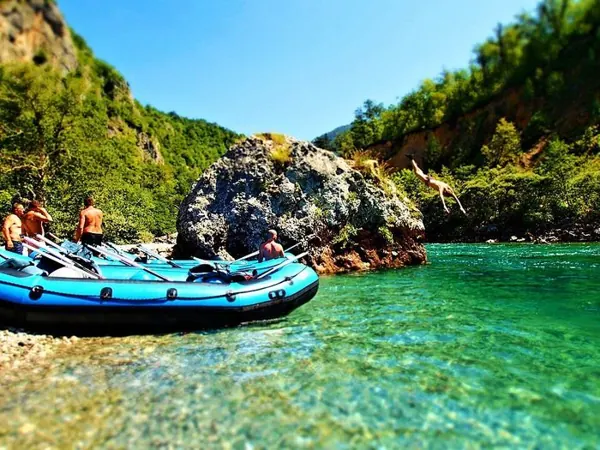
Two useful facts. First, the road from Nikšić to the Piva canyon briefly clips Bosnian territory on some routings — check your map, because it means a crossing you did not plan. Second, the rafting camps at Šćepan Polje sit on the border, and some of the two-day rafting trips camp on the Bosnian bank of the river.
The operators handle that and it is routine, but take your passport on the rafting rather than leaving it at the hotel.
Practical
- All the main crossings are open 24 hours. Some minor ones are not.
- Have everyone's documents out before you reach the window. It speeds the whole queue.
- No passport stamp for EU citizens entering Montenegro in most cases, which occasionally confuses people counting Schengen days.
- Duty-free limits apply — Montenegro is outside the EU customs union, so bringing meat and dairy into Croatia is restricted.