The difference
| Kačamak | Cicvara | |
|---|---|---|
| Base | Cornmeal, sometimes with potato | Cornmeal |
| Fat | Cheese and kajmak added at the end | Kajmak worked in during cooking |
| Texture | Firmer, spoonable, layered | Looser, glossy, almost a batter |
| Served | In the pan, with more kajmak on top | In the pan, sometimes with sour milk |
| Eaten with | Sour milk, prosciutto, pickles | The same |
The short version: kačamak has the dairy added at the end, cicvara has it beaten in throughout. Cicvara is richer and more difficult to make well — worked too little and it separates, worked too long and it goes stringy.
What kajmak is
The layer of fat skimmed from boiled milk as it cools, salted and left to mature. Somewhere between clotted cream and a soft cheese, and the central ingredient of both dishes. Young kajmak is mild and white; matured kajmak is yellow, sharp and much stronger.
It is also served on its own with bread, and on grilled meat, and is the thing most visitors to the north remember.
Why only in the mountains
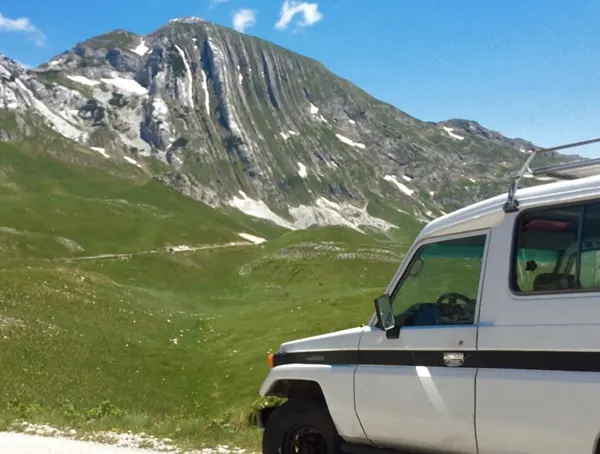
This is highland food built from what a household at 1,000 metres had: maize, milk from summer pasture, and time. It is heavy, hot and enormously caloric, which is correct at altitude in October and absurd in Budva in August.
That is why coastal restaurants either do not serve it or serve a version that has been lightened. The dish belongs to the north and stays there.
Where
- Žabljak and Kolašin — every konoba, done properly, €6 – €10
- Katuns on the high pastures in summer, where the kajmak was made that morning
- Nikšić and the Piva villages
- Etno villages on the Durmitor and Bjelasica roads, which are built for visitors but cook this correctly
The rest of the northern table
| Popeci | Rolled veal stuffed with kajmak and ham, breaded |
| Jagnjetina ispod sača | Lamb under a metal dome buried in embers |
| Pršut and cheese from Kolašin or Pljevlja | The northern answer to Njeguši |
| Trout from the Tara | Grilled, plain |
| Priganice | Fried dough with honey and cheese, served to guests |
What it costs
A main course in the north is generally cheaper than on the coast, and the portions are larger. This is some of the best value eating in the country and almost nobody on a beach holiday ever tries it.