What a katun is
Transhumance — moving livestock up to high pasture for the summer and down again for the winter — has been practised in these mountains for centuries. The katun is the settlement where the family lives while it happens: a few wooden huts, a dairy, and cattle or sheep on the surrounding grass.
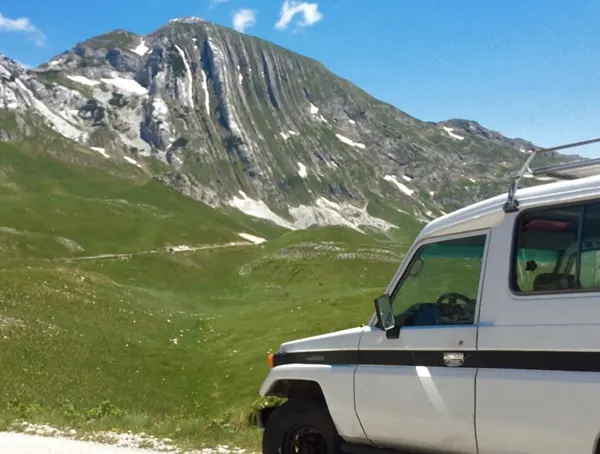
They sit at 1,300 to 1,800 metres, mostly on Durmitor's Sinjajevina and Bjelasica plateaus and in Prokletije. The season runs roughly June to September, dictated by snow. Outside that they are locked and there is nobody there.
What staying is like
| Per person, bed and dinner | €25 – €50 |
| Electricity | Solar or a generator for a few hours, or none |
| Hot water | Sometimes. Assume not. |
| Bathroom | Shared, often an outhouse |
| Phone signal | Patchy to none |
| Heating | A wood stove |
| Season | Roughly mid-June to mid-September |
The food is what the farm produces — kajmak made that morning, cheese, kačamak, lamb, sour milk, bread baked under a lid. It is the best version of that food you will eat anywhere in the country, for the obvious reason.
Where
- Katuns on the Sinjajevina plateau, above Kolašin and Mojkovac
- Katuns on the Durmitor ring road — several sell cheese to passing cars and some take guests
- Bjelasica, above Biogradska Gora, on the walking routes
- Prokletije, around Plav and Gusinje, on the Peaks of the Balkans trail
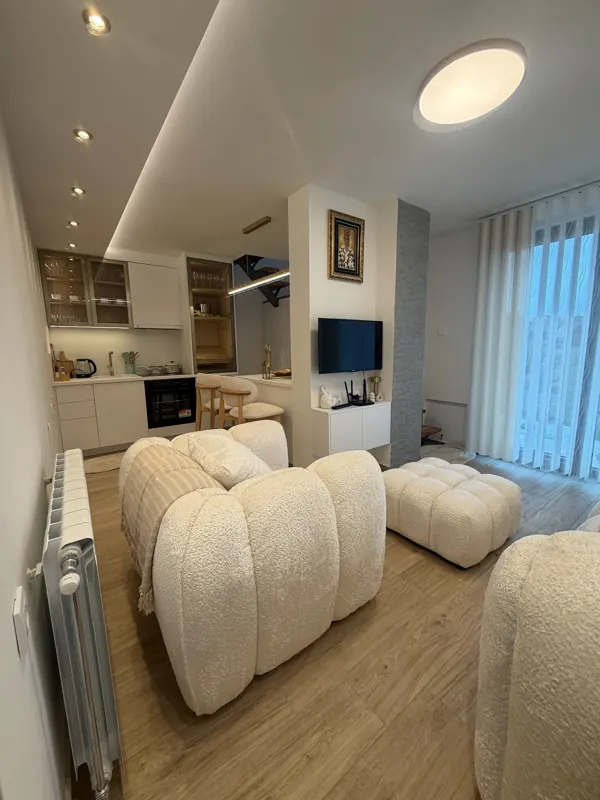
- Eco-village developments near Žabljak and Kolašin — purpose-built for visitors, more comfortable, less authentic
Booking one
Most are not on booking platforms. The realistic routes are through a local guide or agency in Kolašin, Žabljak or Plav, through a guesthouse in the valley who will phone ahead, or by turning up and asking — which works, and is how it was done before anybody had a phone.
Take cash. There is no card terminal on a mountain pasture.
What to bring
- A sleeping bag or a liner — bedding exists but varies
- Warm clothes. It drops to single figures at night in August at 1,600 m
- A head torch
- Cash, in small notes
- Everything you need charged, because you will not charge it there
Why do it
Because it is the last working version of a way of life that has been going on in these mountains for a thousand years, and it is disappearing — fewer families take the cattle up every year. Paying to sleep there is one of the few things that makes it worth continuing.
Also because the sky at 1,600 metres with no electric light for twenty kilometres is not something most people have seen.